
WWII Imperial Japanese Army Air Force Aircraft Propeller Technical Manual 1941
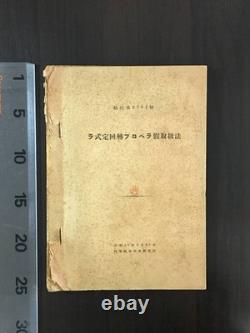
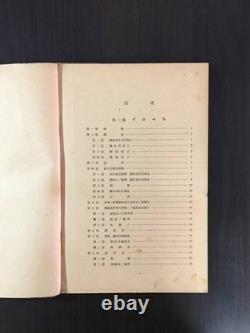
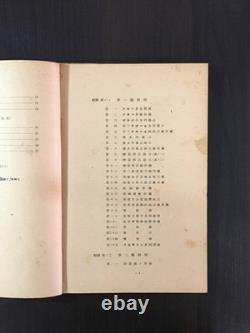
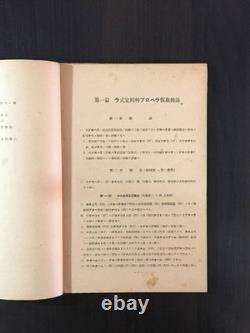
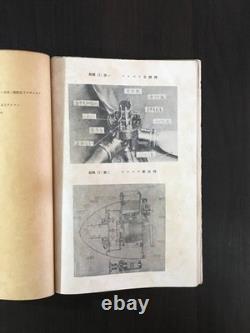
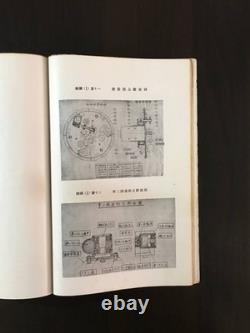
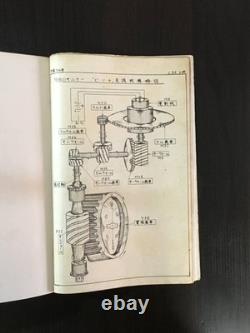
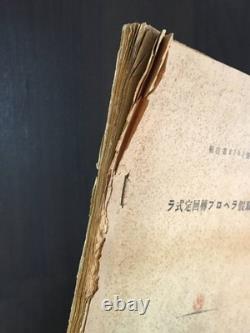

This is an original 1941 Imperial Japanese Army technical manual covering the operation and construction of a military aircraft propeller system. At first glance, it may look like a simple old booklet.
Open it, however, and it reveals a fascinating piece of Japanese military aviation technology. The manual contains numerous period photographs, mechanical diagrams, sectional drawings, and detailed illustrations explaining the propeller system, including its governor, gears, electrical components, and other internal mechanisms. The term "Ra-Type" is particularly interesting. Japan introduced this advanced European propeller technology in the late 1930s and adapted it for use by the Imperial Japanese Army. The Ra-Type constant-speed propeller is documented in connection with Japanese military aircraft, including the Mitsubishi Ki-21 Type 97 Heavy Bomber by 1940. This makes the manual much more than simply a book about propellers. It represents a period when Japan was actively studying foreign aviation technology, adapting it, and incorporating it into its own military aircraft. Today, WWII Japanese aviation is often remembered through famous aircraft such as the Zero or the Ki-43 Oscar. But an aircraft could not fly on its airframe alone.Behind every operational aircraft were engines, propellers, electrical systems, and the technicians who had to understand and maintain them. This manual offers a rare look at that less visible side of Japanese military aviation-the engineering and technical knowledge required to keep an aircraft in the air. It was issued by the Imperial Japanese Army Aeronautical Technical Research Institute, an organization responsible for research and development related to Army aircraft, engines, equipment, and aviation technology. It was therefore produced as a specialized military technical reference rather than as a general book for civilian aviation enthusiasts.
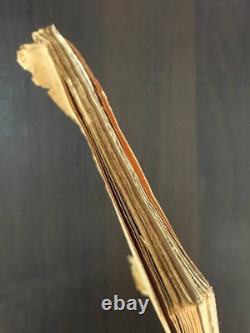
The manual is more than 80 years old and shows substantial age-related wear, including damage around the cover and spine, tears, discoloration, and other deterioration. Please examine the photographs carefully for its condition. It is not a glamorous medal or a piece of an aircraft.
It is something different: a surviving record of the technology-and the people behind that technology-that helped put Japanese military aircraft into the sky. An interesting historical reference for collectors and researchers of WWII aviation, Imperial Japanese Army Air Force history, aircraft engineering, and military technology. Own a Piece of History. International Buyers - Please Note.